

Software Engineering Self-Study Ecosystem A Professional, Research-Based Framework for Lifelong Learning and Closing Global STEM Skill Gaps
Abstract
Software engineering has become a foundational capability for economic competitiveness, innovation, and national resilience. Yet across major STEM-producing regions—including India, the United States, and Canada—there remains a persistent gap between formal education and industry-ready software engineering skills. Rapid technological change, cloud-native systems, DevOps practices, artificial intelligence, and distributed architectures have outpaced traditional curricula and organizational training models.
This research white paper presents a professional, self-study–centric software engineering education framework. The framework integrates authoritative books, Armando Fox’s Engineering Software as a Service (ESaaS) pedagogy and Berkeley CS169 courses, university-grade MOOCs, Udemy-based practical learning, GitHub open-source participation, and Kaizen-driven continuous improvement. The paper demonstrates how disciplined self-study—supported by research and industry partners such as IAS-Research.com and KeenComputer.com—can systematically close skill gaps, enhance employability, and strengthen SME and national innovation ecosystems.
1. Introduction
Software engineering is no longer defined solely by the ability to write code. Modern engineers must design scalable systems, reason about trade-offs, ensure quality through testing and automation, collaborate in distributed teams, and continuously adapt to new technologies. In this environment, self-study is not optional; it is a core professional competency.
Traditional degree programs provide valuable foundations but are constrained by slow update cycles and limited exposure to production realities. At the same time, organizations—particularly small and medium enterprises (SMEs)—often lack the resources to provide deep, ongoing training. Open educational resources, MOOCs, open-source ecosystems, and practitioner-led platforms now enable a new model: self-directed, lifelong software engineering education.
This paper reframes self-study as a disciplined engineering system and proposes a research-based framework for sustainable professional growth.
2. Methodology
This white paper is based on a qualitative synthesis of:
- Classic and modern software engineering literature
- University curricula and open computer science lecture series
- MOOC platforms and practitioner-led marketplaces
- Open-source learning practices on GitHub
- Lean, Kaizen, and systems-thinking principles applied to knowledge work
The focus is on rigor, long-term relevance, scalability, and applicability across diverse economic and regional contexts.
3. Foundational Literature for Software Engineering Self-Study
Books remain the cornerstone of deep professional understanding because they encode principles that outlast tools and frameworks.
3.1 Classic Software Engineering Foundations
- The Pragmatic Programmer – Professional mindset, adaptability, and craftsmanship
- Code Complete – Disciplined software construction practices
- Clean Architecture – Long-term maintainability and architectural separation
- The Mythical Man-Month – Enduring lessons on complexity and project management
- Design Patterns (GoF) – Reusable solutions to recurring design problems
These works cultivate engineering judgment rather than short-term technical skills.
3.2 Armando Fox and Modern SaaS-Oriented Engineering
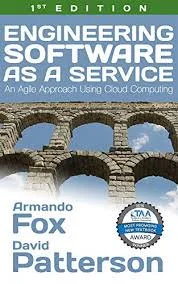
Armando Fox’s Engineering Software as a Service (ESaaS) and the associated Berkeley CS169: Software Engineering courses represent a modern, industry-aligned evolution of software engineering education.
Key characteristics include:
- End-to-end lifecycle thinking (requirements → deployment → maintenance)
- Test-driven and behavior-driven development as default practice
- Cloud-native, SaaS-first system design
- Continuous integration and deployment
- Case-study-based learning reflecting startup and SME constraints
For self-learners, ESaaS provides a critical bridge between academic concepts and production-grade engineering.
4. Structured Courses and Platforms for Self-Directed Learning
4.1 University MOOCs and OSSU
Platforms such as Coursera, edX, and the Open Source Society University (OSSU) provide structured, theory-rich curricula comparable to formal degrees. They are essential for grounding self-study in computer science fundamentals and software engineering theory.
4.2 Udemy and Practitioner-Led Learning
Udemy complements academic learning by offering affordable, tool-focused courses in:
- Full-stack development
- Cloud platforms and DevOps
- Testing, CI/CD, and automation
When used selectively, Udemy accelerates practical readiness without replacing foundational study.
5. GitHub and Open Source as a Self-Study Laboratory
GitHub transforms self-study into experiential learning. Through open-source participation, learners gain:
- Exposure to real-world codebases
- Experience with collaborative workflows and code reviews
- Understanding of architectural and maintenance trade-offs
- Professional engineering habits
Open source converts theoretical knowledge into applied competence.
6. University Video Lectures and Conceptual Depth
Open lecture series from MIT, Berkeley, Stanford, and Harvard provide academic rigor, historical context, and research-driven thinking. Courses such as Berkeley CS169 and MIT’s Structure and Interpretation of Computer Programs (SICP) strengthen abstraction, reasoning, and design skills essential for senior engineers.
7. Global STEM Skill Gap Analysis
7.1 India
India produces a large volume of STEM graduates, yet many lack exposure to industry-ready software engineering practices. Self-study is critical for bridging gaps in system design, testing, DevOps, and collaborative development.
7.2 United States
In the United States, rapid technological change and high training costs make continuous self-study essential for career longevity and SME competitiveness.
7.3 Canada
Canada faces persistent shortages of experienced software engineers, particularly in SMEs and the public sector. Accelerated self-study and applied upskilling models are essential to address these gaps.
8. Kaizen and Self-Study as a Professional Engineering System
Kaizen reframes self-study as a continuous, measurable improvement process rather than ad hoc learning.
8.1 Kaizen Practices for Software Engineers
- Daily incremental learning
- Continuous refactoring and improvement
- Feedback through tests, metrics, and reviews
- Regular retrospectives
8.2 The Self-Study Improvement Loop
Plan → Study → Apply → Measure → Reflect → Improve
This loop transforms learning into an engineering system aligned with professional practice.
9. Integrated Professional Self-Study Framework
A sustainable self-study pathway integrates:
- Foundational software engineering books
- Armando Fox’s ESaaS and CS169 methodology
- MOOCs for theoretical grounding
- Udemy for rapid practical upskilling
- GitHub open-source contribution
- Kaizen-driven continuous improvement
- Mentorship and peer review
This framework is globally applicable and economically scalable.
10. Role of IAS-Research.com and KeenComputer.com
IAS-Research.com
IAS-Research.com supports self-study and professional growth through:
- Research-driven software and systems engineering
- Advanced architecture, AI, and analytics expertise
- High-rigor mentorship and applied research training
KeenComputer.com
KeenComputer.com focuses on practical execution by providing:
- Hands-on software engineering and DevOps solutions
- SME-focused digital transformation
- Workforce upskilling and open-source adoption
Together, they provide structure, rigor, and real-world application for self-study professionals and organizations.
11. Conclusion
Self-study is no longer supplementary—it is a defining characteristic of professional software engineers. By integrating authoritative literature, applied SaaS pedagogy, open-source practice, and Kaizen-driven continuous improvement, individuals and organizations can systematically close skill gaps and build resilient engineering capability.
This white paper presents a comprehensive, professional framework for lifelong software engineering self-study capable of strengthening individual careers, SMEs, and national innovation ecosystems.
12. Comprehensive References for Professional Self-Study (APA Style)
The following references provide a complete, citable foundation for professional, long-term self-study in software engineering. They are suitable for academic, policy, and industry white papers.
12.1 Core Software Engineering and Professional Practice
Hunt, A., & Thomas, D. (2019). The Pragmatic Programmer: Your Journey to Mastery (20th Anniversary ed.). Addison-Wesley.
McConnell, S. (2004). Code Complete: A Practical Handbook of Software Construction (2nd ed.). Microsoft Press.
Martin, R. C. (2017). Clean Architecture: A Craftsman’s Guide to Software Structure and Design. Prentice Hall.
Brooks, F. P. (1995). The Mythical Man-Month: Essays on Software Engineering (Anniversary ed.). Addison-Wesley.
Gamma, E., Helm, R., Johnson, R., & Vlissides, J. (1994). Design Patterns: Elements of Reusable Object-Oriented Software. Addison-Wesley.
12.2 Modern Software Engineering, SaaS, and Large-Scale Systems
Fox, A., & Patterson, D. (2014). Engineering Software as a Service: An Agile Approach Using Cloud Computing. Strawberry Canyon.
Winters, T., Manshreck, T., & Wright, H. (2020). Software Engineering at Google: Lessons Learned from Programming Over Time. O’Reilly Media.
Newman, S. (2021). Building Microservices (2nd ed.). O’Reilly Media.
Richards, M., & Ford, N. (2020). Fundamentals of Software Architecture. O’Reilly Media.
12.3 Computer Science Foundations for Self-Study
Abelson, H., & Sussman, G. J. (1996). Structure and Interpretation of Computer Programs (2nd ed.). MIT Press.
Cormen, T. H., Leiserson, C. E., Rivest, R. L., & Stein, C. (2009). Introduction to Algorithms (3rd ed.). MIT Press.
Tanenbaum, A. S., & van Steen, M. (2017). Distributed Systems: Principles and Paradigms (2nd ed.). Pearson.
Silberschatz, A., Korth, H. F., & Sudarshan, S. (2019). Database System Concepts (7th ed.). McGraw-Hill.
12.4 University Courses and Open Educational Resources
Fox, A. (Instructor). CS169: Software Engineering. University of California, Berkeley.
Massachusetts Institute of Technology. MIT OpenCourseWare: Electrical Engineering and Computer Science.
Stanford University. Open Computer Science and Software Engineering Courses.
Harvard University. Computer Science and Software Engineering Lecture Series.
12.5 MOOCs and Online Learning Platforms
Open Source Society University. (n.d.). OSSU Computer Science Curriculum.
Coursera. (n.d.). Software Engineering and Computer Science Specializations.
edX. (n.d.). Professional Certificates in Software Engineering and Systems.
Udemy. (n.d.). Software Engineering, Full-Stack Development, DevOps, and Cloud Computing Courses.
freeCodeCamp. (n.d.). Project-Based Software Engineering Curriculum.
12.6 GitHub Repositories and Open-Source Learning Infrastructure
Open Source Society University. Computer Science Curriculum Repository. https://github.com/ossu/computer-science
Developer-Y. Computer Science Video Courses. https://github.com/Developer-Y/cs-video-courses
Alliedium. Awesome Software Engineering. https://github.com/Alliedium/awesome-software-engineering
Prakhar1989. Awesome Courses. https://github.com/prakhar1989/awesome-courses
Washam, J. Coding Interview University. https://github.com/jwasham/coding-interview-university
Ahmed, K. Developer Roadmap. https://github.com/kamranahmedse/developer-roadmap
12.7 Kaizen, Lean Thinking, and Continuous Improvement
Imai, M. (1986). Kaizen: The Key to Japan’s Competitive Success. McGraw-Hill.
Ohno, T. (1988). Toyota Production System: Beyond Large-Scale Production. Productivity Press.
Senge, P. M. (2006). The Fifth Discipline: The Art and Practice of the Learning Organization. Doubleday.
Clear, J. (2018). Atomic Habits: An Easy & Proven Way to Build Good Habits & Break Bad Ones. Avery.
12.8 Industry, Research, and Mentorship Organizations
IAS-Research.com. Research-Driven Engineering, Advanced Systems, and STEM Upskilling.
KeenComputer.com. Practical Software Engineering, SME Digital Transformation, and Workforce Enablement.
These references collectively support foundational theory, applied software engineering, disciplined self-study, and continuous professional improvement, forming a complete and citable ecosystem for lifelong software engineering mastery.