

A Research White Paper-Self-Study Pathways for AI, Data, and Software Careers For Working Engineers, Scientists, and STEM Graduates
Executive Summary
The global demand for professionals skilled in artificial intelligence (AI), machine learning (ML), big data engineering, and large language models (LLMs) has outpaced the capacity of traditional university programs. Working engineers, scientists, and recent STEM graduates increasingly rely on self-study ecosystems—combining textbooks, professional books, online video platforms, open-source projects, and applied research work—to reskill and remain competitive in global job markets.
This research white paper presents a comprehensive, structured, and professionally curated self-study framework covering nine critical domains:
- Machine Learning & Python
- Big Data Engineering
- NoSQL Databases
- NLP & Transformers
- Retrieval-Augmented Generation (RAG-LLM)
- Development of Large Language Models
- Open-Source Frameworks and Tools
- Paid and Free REST APIs
- Free University Courses
The paper integrates books, Udemy and Packt video courses, trade publications, university textbooks, GitHub repositories, and research tools, and demonstrates how IAS-Research.com, KeenComputer.com, and KeenDirect.com enable learners to convert self-study into job-ready skills through outsourced research and development (R&D) projects.
Special emphasis is placed on STEM graduates in India, Canada, the UK, and the USA, addressing job creation, reskilling, and upskilling challenges.
1. Introduction: The Case for Structured Self-Study
Rapid technological change has shortened the half-life of engineering skills. Employers now prioritize demonstrable competence, production experience, and portfolio evidence over formal credentials alone. Self-study—when guided by structured frameworks and validated through real-world projects—has emerged as the most effective pathway for continuous professional development.
However, unstructured self-learning often leads to fragmented knowledge. This paper addresses that gap by offering a research-based, end-to-end learning architecture aligned with industry hiring requirements.
2. Machine Learning & Python
Core Knowledge Areas
- Supervised and unsupervised learning
- Feature engineering and model evaluation
- Model deployment basics
Books & Textbooks
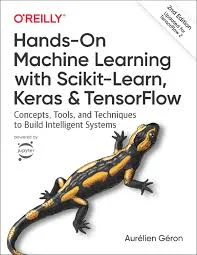
- Aurélien Géron, Hands-On Machine Learning with Scikit-Learn, Keras & TensorFlow (O’Reilly)
- Tom Mitchell, Machine Learning (McGraw-Hill)
- Kevin Murphy, Machine Learning: A Probabilistic Perspective (MIT Press)
Udemy & Packt Video Courses
- Udemy: Python for Data Science and Machine Learning Bootcamp
- Udemy: Machine Learning A–Z™
- Packt: Applied Machine Learning with Python
Trade Publications
- Towards Data Science
- KDnuggets
- O’Reilly AI Radar
GitHub Repositories
- scikit-learn
- pandas-dev/pandas
- tensorflow/models
3. Big Data Engineering
Core Knowledge Areas
- Distributed systems
- Batch and stream processing
- Data pipelines
Books & Textbooks
- Martin Kleppmann, Designing Data-Intensive Applications (O’Reilly)
- Tyler Akidau et al., Streaming Systems (O’Reilly)
Udemy & Packt Video Courses
- Udemy: Apache Spark with Python
- Udemy: Apache Kafka Series
- Packt: Big Data Analytics with Hadoop and Spark
GitHub Repositories
- apache/spark
- apache/kafka
- apache/airflow
4. NoSQL Databases
Core Knowledge Areas
- Document, key-value, column, and graph databases
- CAP theorem and consistency models
Books
- Pramod Sadalage & Martin Fowler, NoSQL Distilled
- Eric Redmond & Jim Wilson, Seven Databases in Seven Weeks
Video Courses
- Udemy: MongoDB – The Complete Developer Guide
- Packt: Learning Neo4j
GitHub Repositories
- mongodb/mongo
- apache/cassandra
- neo4j/neo4j
5. NLP & Transformers
Core Knowledge Areas
- Tokenization and embeddings
- Attention mechanisms
- Transformer architectures
Books & Textbooks
- Jurafsky & Martin, Speech and Language Processing
- Lewis et al., Natural Language Processing with Transformers
Video Courses
- Udemy: NLP with Python
- Packt: Hands-On Transformers with PyTorch
GitHub Repositories
- huggingface/transformers
- explosion/spaCy
6. Retrieval-Augmented Generation (RAG-LLM)
Core Knowledge Areas
- Vector embeddings
- Semantic search
- Knowledge-grounded generation
Tools & Frameworks
- LangChain
- LlamaIndex
- Pinecone, Weaviate, FAISS
GitHub Repositories
- langchain-ai/langchain
- run-llama/llama_index
- facebookresearch/faiss
7. Development of Large Language Models
Core Knowledge Areas
- Fine-tuning and prompt engineering
- Evaluation metrics
- Model deployment strategies
Books
- Goodfellow, Bengio & Courville, Deep Learning
GitHub Repositories
- huggingface/trl
- openlm-research/open_llama
8. Open-Source Frameworks and Tools
Key Technologies
- PyTorch, TensorFlow
- FastAPI
- Docker & Kubernetes
GitHub Repositories
- pytorch/pytorch
- fastapi/fastapi
- kubernetes/kubernetes
9. Paid and Free REST APIs
Core Knowledge Areas
- API design
- Authentication & rate limiting
Platforms
- OpenAI API
- Hugging Face Inference API
- Google Cloud AI APIs
10. Free University Courses
Recommended Sources
- MIT OpenCourseWare (AI, ML, Systems)
- Stanford Online (ML, NLP)
- Harvard CS50 AI
- University of Toronto AI courses
11. Outsourced Research & Development Projects
Why R&D Projects Matter
Outsourced R&D enables learners to apply theoretical knowledge to real-world problems, producing deployable systems and validated research outputs.
How Organizations Help
IAS-Research.com
- Research design and validation
- Feasibility studies and benchmarking
- White papers and applied research
KeenComputer.com
- Full-stack AI and data engineering
- Cloud deployment and DevOps
- Enterprise-grade solutions
KeenDirect.com
- Productization and go-to-market strategy
- Analytics-driven growth
- AI-enabled digital platforms
12. STEM Graduates, Job Creation, and Reskilling
India
Large STEM talent pool with strong IT foundations; self-study combined with R&D projects enables global employability.
Canada
AI research hubs and government reskilling initiatives create demand for applied ML engineers.
United Kingdom
Focus on AI for healthcare, finance, and energy creates opportunities for reskilled professionals.
United States
Largest AI job market globally; strong demand for production-ready AI engineers.
13. Conclusion
A structured self-study ecosystem—supported by curated resources, open-source tools, and outsourced R&D—provides a scalable and globally relevant pathway for engineers and scientists to transition into high-impact AI and data roles. Organizations such as IAS-Research.com, KeenComputer.com, and KeenDirect.com play a critical role in bridging learning with real-world application.
14. Extensive References
- Géron, A. Hands-On Machine Learning with Scikit-Learn, Keras & TensorFlow. O’Reilly, 2019.
- Goodfellow, I., Bengio, Y., Courville, A. Deep Learning. MIT Press, 2016.
- Jurafsky, D., Martin, J. Speech and Language Processing. Pearson, 2021.
- Kleppmann, M. Designing Data-Intensive Applications. O’Reilly, 2017.
- Mitchell, T. Machine Learning. McGraw-Hill, 1997.
- Murphy, K. Machine Learning: A Probabilistic Perspective. MIT Press.
- Stanford University. CS229: Machine Learning.
- MIT OpenCourseWare – Machine Learning, Linear Algebra, Probability.
- Harvard CS50 AI.
- Hugging Face Documentation and Model Hub.
- Apache Software Foundation Documentation.
- KDnuggets Industry Reports.
- Gartner AI and Data Analytics Forecasts.
- McKinsey Global Institute – AI and Workforce Reports.
Appendix C: Extended GitHub Repositories (Tools & Methods)
Machine Learning & Python
- https://github.com/scikit-learn/scikit-learn
- https://github.com/pandas-dev/pandas
- https://github.com/numpy/numpy
Big Data
NoSQL
NLP & Transformers
RAG & LLM Systems
- https://github.com/langchain-ai/langchain
- https://github.com/run-llama/llama_index
- https://github.com/facebookresearch/faiss
LLM Development
APIs & Deployment
- https://github.com/fastapi/fastapi
- https://github.com/docker/docker-ce
- https://github.com/kubernetes/kubernetes